FREE SHIPPING ON ORDERS OVER 100$ IN HALIFAX, NS
FREE SHIPPING ON ORDERS OVER 200$ CANADAWIDE
COLLECT POINTS ON EACH PURCHASE
REFER A FRIEND AND EARN POINTS
CANADAWIDE EXPRESS SHIPPING


HHC in Canada: Effects, Legality, Benefits & HHC vs THC

HHC in Canada: Effects, Legality, HHC vs THC & Product Guide
Cannabis consumers are discovering more cannabinoids than ever before.
THC and CBD may dominate the conversation, but another cannabinoid has started attracting attention: HHC.
Some users describe it as sitting somewhere between traditional THC and newer hemp-derived cannabinoids.
Others simply want answers to practical questions:
- What is HHC?
- Does HHC get you high?
- Is HHC legal in Canada?
- How does it compare to THC?
Let’s break it down.
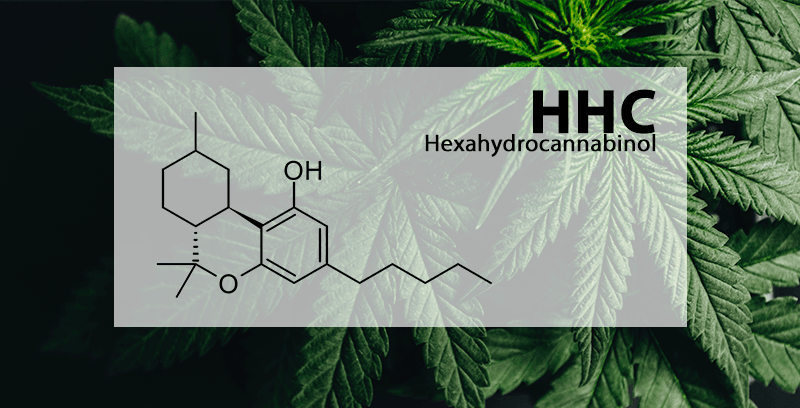
HHC (Hexahydrocannabinol) is a cannabinoid related to THC that produces psychoactive effects. Many users describe HHC as offering effects similar to traditional THC, although potency, duration, and individual experiences may vary. HHC has gained attention due to its unique chemical structure and growing presence in vape and cannabinoid products.
What Is HHC ?
HHC stands for Hexahydrocannabinol.
It belongs to the cannabinoid family alongside:
- THC
- CBD
- CBN
- CBC
- CBG
Cannabinoids are naturally occurring compounds found in cannabis plants that interact with the body’s endocannabinoid system.
Unlike CBD, HHC can produce intoxicating effects.
Unlike Delta-9 THC, HHC has a slightly different molecular structure, which may influence how it interacts with cannabinoid receptors.
HOW HHC IS MADE
Many consumers assume HHC is entirely synthetic.
That’s not exactly accurate.
Researchers have identified trace amounts of naturally occurring HHC in cannabis plants.
However, the concentrations are extremely small.
Most commercial HHC products are produced through cannabinoid conversion and hydrogenation processes that modify cannabinoid molecules into HHC.
How HHC Works in the Body
Like THC, HHC interacts with the body’s:
- Endocannabinoid System (ECS)
- CB1 receptors
- CB2 receptors
The ECS helps regulate numerous physiological functions including:
- Mood
- Appetite
- Sleep
- Stress response
- Memory
- Pain signalling
When cannabinoids bind to these receptors, users may experience physical and mental effects.
Understanding the Endocannabinoid System
The endocannabinoid system is one of the most important biological systems involved in cannabinoid research.
It consists of:
Endocannabinoids
Naturally produced compounds within the body.
Receptors
- CB1 receptors
- CB2 receptors
Enzymes
Responsible for breaking down cannabinoids after use.
Understanding this system helps explain why cannabinoids such as THC, CBD and HHC may affect people differently.
Sources
- https://en.wikipedia.org/wiki/Hexahydrocannabinol
- https://worldwide.espacenet.com/patent/search/family/024105324/publication/US2419937A?q=pn%3DUS2419937
- https://thecannabisindustry.org/tag/hydrogenated-cannabinoids/
HHC VS THC: WHAT ACTUALLY FEELS DIFFERENT
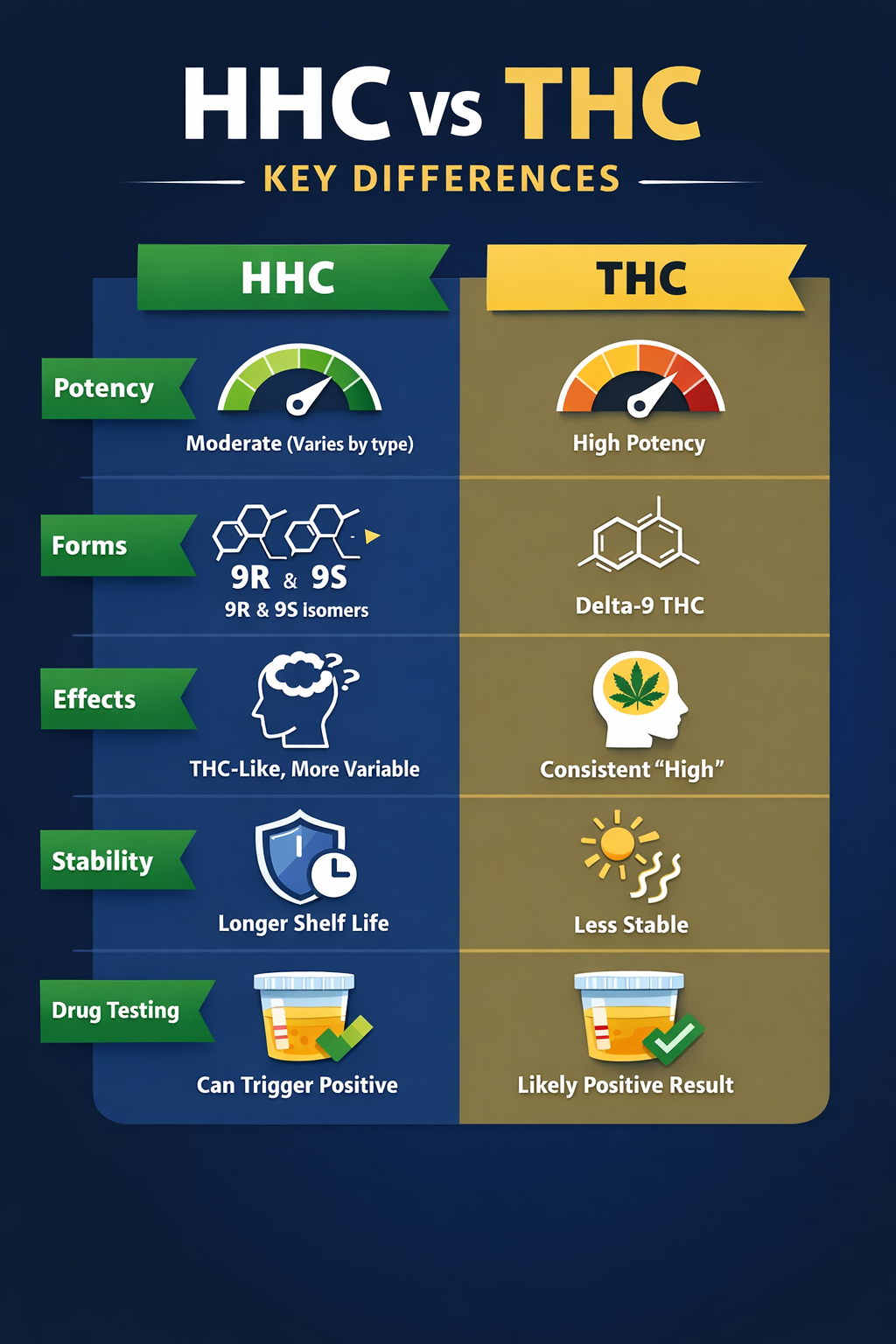
Consumers often compare HHC to THC because both can produce intoxicating effects.
However, THC remains significantly better studied.
| Attribute | HHC | THC |
|---|---|---|
| Psychoactive | Yes | Yes |
| Research Availability | Limited | Extensive |
| Occurs Naturally | Trace amounts | Naturally abundant |
| Consumer Familiarity | Emerging | Established |
| Product Availability | Limited | Widely available |
HHC vs CBD
Many new consumers confuse HHC with CBD.
The two cannabinoids are very different.
| Attribute | HHC | CBD |
|---|---|---|
| Intoxicating | Yes | No |
| Psychoactive Effects | Yes | No |
| Interaction With CB1 Receptors | Stronger | Limited |
| Consumer Purpose | Recreational & wellness interest | Wellness-focused |
CBD does not typically produce the intoxicating effects associated with HHC.
Potency
Most reviews of the scientific literature describe HHC as producing typical cannabinoid CNS effects, often with lower potency than delta-9 THC overall. That said, potency depends on the ratio of active to less-active HHC forms and the product formulation.
“Type” of high
Common user descriptions place HHC somewhere between delta-8 and delta-9 THC in intensity, but that is largely anecdotal. The more useful expectation: HHC can feel THC-like, but variability is higher than regulated THC products because of batch composition differences and manufacturing variability.
Stability and shelf life
Hydrogenation can increase stability and resistance to breakdown from heat and light. That is one reason HHC gained attention in the first place.
HHC BENEFITS PEOPLE LOOK FOR
It is easy to find marketing claims. Evidence is thinner.
Plausible, based on cannabinoid receptor activity and what is known from THC class effects:
- • Relaxation and stress reduction
- • Appetite stimulation
- • Sleepiness at higher doses
- • Altered sensory perception and mood changes
Early-stage research signals (not clinical proof in humans):
• Reviews note limited but emerging pharmacology and toxicology data, with repeated emphasis that robust clinical evidence is lacking.
• Vaping360 references preclinical findings on synthetic analogs and animal work, but these do not establish safe or effective medical use for consumers.
Bottom line: any “medical benefit” claim for consumer HHC products is premature. At most, the science supports “biological activity consistent with cannabinoids,” not “proven therapeutic outcomes.”
WHAT ARE THE SIDE EFFECTS AND RISKS OF HHC?
Expected side effects often mirror THC, especially at higher doses:
- • Dry mouth
- • Red or dry eyes
- • Increased appetite
- • Drowsiness or grogginess
- • Anxiety or paranoia, especially in new users or at higher doses
- • Impaired coordination and reaction time
Two risks that deserve more attention:
Product variability and contaminants
HHC is typically manufactured via chemical conversion. That raises the quality-control bar. Poor purification or weak testing can leave residual reagents, unknown byproducts, or inaccurate potency labelling. Comprehensive third-party lab
reporting matters more for HHC than for many conventional categories.
Stronger “overdoing it” potential than people expect
Because onset differs by product type (vape vs edible), it is easy to stack doses. Waiting and titrating matters.
Does HHC Get You High?
Yes.
HHC is generally considered psychoactive.
Many users report effects such as:
- Euphoria
- Mood elevation
- Relaxation
- Altered perception
- Mental calmness
Individual experiences vary significantly based on:
- Product potency
- Consumption method
- Body chemistry
- Tolerance
Vape or inhalation
- • Faster onset (minutes)
- • Shorter total duration than edibles
- • Easier to titrate, but easier to overuse if chain-hitting
Edibles
- • Slower onset (often 30–120 minutes)
- • Longer duration
- • Higher risk of taking too much too soon
Precise pharmacokinetic ranges for consumer HHC are not well established in the way THC is, so treat this as “general cannabinoid behaviour,” not a promise.
Will HHC Show Up on a Drug Test?
This is one of the most important questions for many consumers.
At present, research remains limited.
However, because HHC is structurally similar to THC, there is a possibility that some drug tests may detect cannabinoid metabolites associated with HHC use.
Anyone subject to workplace or legal drug testing should exercise caution.
Practical implication: if testing is a concern (employment, athletics, legal settings), avoiding intoxicating cannabinoids is the safest choice.
IS HHC LEGAL IN CANADA?
HHC legality is not a simple loophole.
Health Canada has published guidance on “intoxicating cannabinoids” that recommends applying delta-9 THC controls to other intoxicating cannabinoids in cannabis products. This framing matters because it signals regulatory intent: intoxicating cannabinoids beyond delta-9 THC are not treated as a free-for-all.
Because rules and enforcement can change, the safest operational stance for Canadian audiences is: treat HHC as regulated and do not market it as a legal workaround.
In NOVA SCOTIA, you can get premium cannabis products online with fast same day delivery at The Smoke Bomb.
IS HHC LEGAL IN THE UNITED STATES AND ELSEWHERE?
In the U.S., legality discussions often reference the 2018 Farm Bill definition of hemp and court interpretations around hemp derivatives, but this remains jurisdiction-dependent and subject to change. Vaping360 covers this landscape and notes the risk of state-level bans.
Internationally, monitoring bodies have published technical reports on HHC and related substances, and there have been developments in global scheduling conversations.
HOW TO CHOOSE SAFER HHC PRODUCTS?
These are the checks that reduce avoidable risk:
Lab testing essentials to look for
- • A recent Certificate of Analysis (COA) from an independent lab
- • Cannabinoid potency panel showing HHC amount and any THC content
- • Contaminants testing: heavy metals, pesticides, microbial, residual solvents
- • A batch number on the package that matches the COA
Formulation sanity checks
- • Avoid products that hide the ingredient list
- • Be cautious with “mystery blends” or “proprietary mixes”
- • Be cautious with extreme claims (stronger than THC, zero side effects)
DOSING GUIDANCE (CONSERVATIVE, PRACTICAL)
For inhaled products
- • Start with 1 small puff
- • Wait 10–15 minutes
- • Increase slowly
For edibles
- • Start low
- • Wait at least 2 hours before taking more
- • Avoid mixing with alcohol or other sedatives
This is not medical advice. It is dose-control logic that reduces bad outcomes when data is limited.
FAQ: HHC in Canada
What is HHC?
HHC (Hexahydrocannabinol) is a cannabinoid related to THC that may produce psychoactive effects.
Does HHC get you high?
Yes, HHC can be psychoactive and produce THC-like effects, but strength varies by product and the mix of HHC forms.
Is HHC stronger than THC?
Most evidence suggests HHC is often less potent than delta-9 THC overall, though some HHC forms show meaningful CB1 activity.
Is HHC natural?
It can occur naturally in small amounts in cannabis, but most commercial HHC is produced through chemical conversion and hydrogenation.
Can HHC cause anxiety?
It can, especially at higher doses or in new users, similar to THC.
Can HHC be detected in drug testing?
Evidence supports that HHC metabolites can be detected, depending on the test and targets.
Verified Sources
- Health Canada Cannabis Information
https://www.canada.ca/en/health-canada/services/drugs-medication/cannabis.html - Cannabis Act (Justice Canada)
https://laws-lois.justice.gc.ca/eng/acts/c-24.5/ - National Center for Biotechnology Information (Cannabinoids)
https://www.ncbi.nlm.nih.gov/books/NBK425767/ - PubChem – Hexahydrocannabinol (HHC)
https://pubchem.ncbi.nlm.nih.gov/ - https://www.congress.gov/115/bills/hr2/BILLS-115hr2enr.pdf
- https://thecannabisindustry.org/tag/hydrogenated-cannabinoids/
- https://vaping360.com/vape-news/114871/court-says-delta-8-thc-is-federally-legal/
- https://www.jdsupra.com/legalnews/the-ninth-circuit-leaves-open-the-delta-7215610/
- https://pmc.ncbi.nlm.nih.gov/articles/PMC10616920/
- https://pubmed.ncbi.nlm.nih.gov/20950604/
- https://www.researchgate.net/figure/Antinociceptive-effects-of-9a-OH-HHC-and-8-OH-iso-HHC-in-mice_tbl1_225788188