FREE SHIPPING ON ORDERS OVER 100$ IN HALIFAX, NS
FREE SHIPPING ON ORDERS OVER 200$ CANADAWIDE
COLLECT POINTS ON EACH PURCHASE
REFER A FRIEND AND EARN POINTS
CANADAWIDE EXPRESS SHIPPING


How to Choose the Right Flower: THC, CBD, Terpenes & Effects

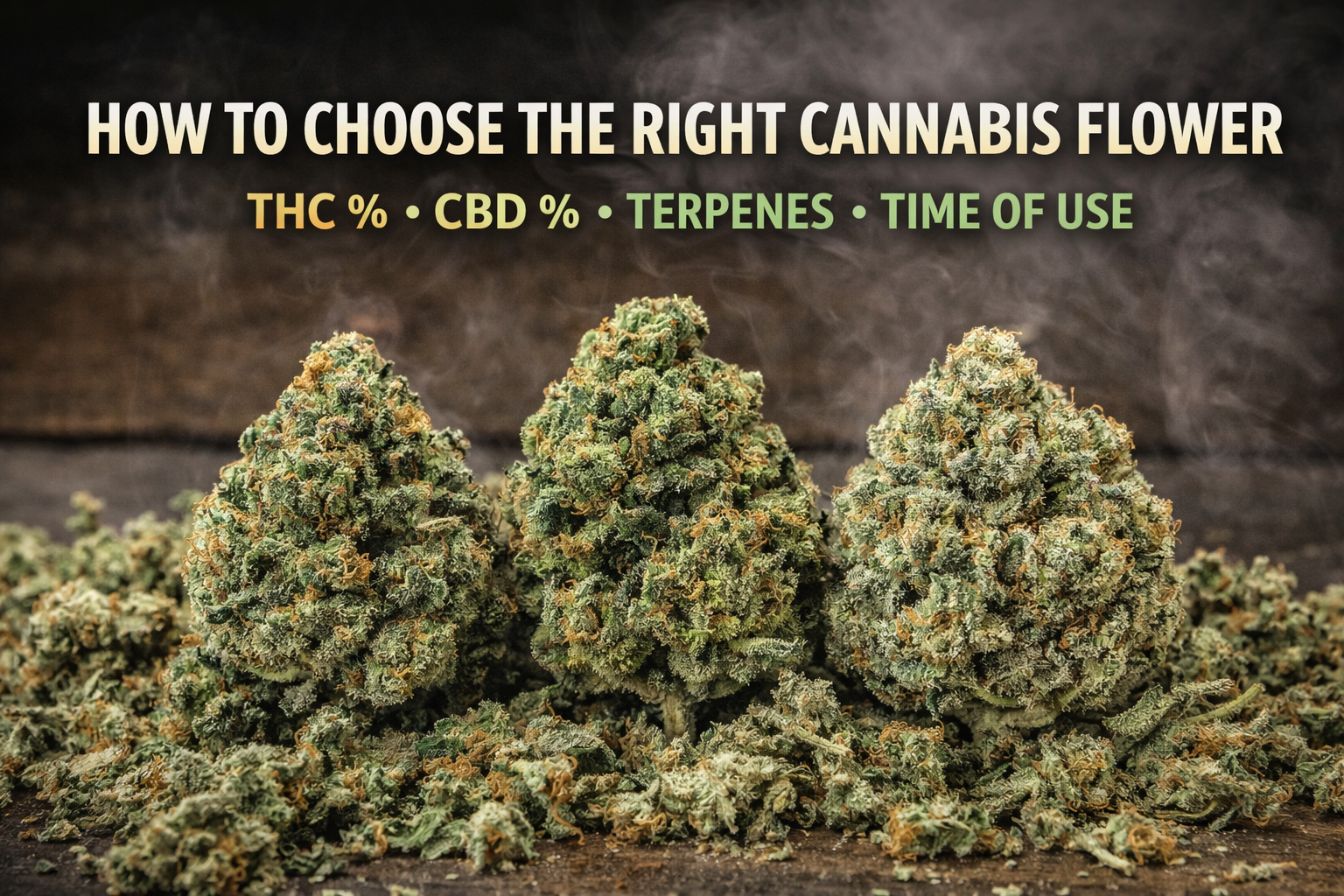
Learn how to choose the right cannabis flower by THC %, CBD %, terpene profile, desired effect, and time of use. Clear, beginner-friendly guide.
Choosing cannabis flower should not be guesswork.
Many buyers focus only on THC percentage.
Others rely on strain names.
Some follow “indica vs sativa” labels.
The reality is more nuanced.
The right flower depends on:
- Cannabinoid balance
- Terpene profile
- Your tolerance level
- Your intended experience
- Time of day
This guide breaks it down in a structured, practical way so you can choose flower based on outcome — not hype.
Choosing Flower by THC Percentage
THC (delta-9-tetrahydrocannabinol) is the primary psychoactive compound in cannabis.
It binds primarily to CB1 receptors in the brain and influences mood, perception, and coordination.
According to the National Institute on Drug Abuse, THC affects reward pathways and neurotransmitter release, which explains its intoxicating effects.
General THC Categories
Low THC: 10–15%
Moderate THC: 15–20%
High THC: 20–25%
Very High THC: 25%+
Who Should Choose Lower THC?
- Beginners
- Low tolerance users
- Daytime consumers
- Those prone to anxiety
Lower THC flower can feel clearer and easier to manage.
Who May Prefer Higher THC?
- Experienced consumers
- Evening users
- Those seeking stronger euphoria
However, higher THC does not automatically mean better quality or better experience. Terpenes and minor cannabinoids significantly influence effects.
Choosing Flower by CBD Percentage
CBD (cannabidiol) is non-intoxicating.
The World Health Organization states CBD shows no evidence of abuse or dependence potential.
CBD can moderate some of THC’s psychoactive intensity.
CBD-Dominant Flower
-
Often contains low THC
-
Suitable for daytime use
-
Preferred for non-intoxicating effects
Balanced THC:CBD Flower (1:1 Ratio)
- Equal or near-equal THC and CBD
- Produces milder intoxication
- Often described as smoother or more functional
Balanced strains are often recommended for users who want moderate psychoactive effects without intensity spikes.
Choosing Flower by Terpene Profile
Terpenes are aromatic compounds that influence how cannabis feels and smells.
Research published in Frontiers in Neurology discusses potential synergistic interactions between cannabinoids and terpenes, sometimes referred to as the “entourage effect.”
Here are common terpenes and what consumers associate with them:
Myrcene
Often found in relaxing or sedating strains.
Limonene
Associated with uplifting or mood-enhancing profiles.
Pinene
Linked with alertness and clarity.
Linalool
Often described as calming.
Instead of choosing by strain name, many experienced users now choose by dominant terpene.
A strain with 18% THC and strong limonene may feel more energizing than a 24% THC strain dominated by myrcene.
Terpene composition matters.
Choosing Flower by Desired Effect
Rather than starting with strain labels, start with your goal.
If You Want Energy
Look for:
-
Moderate THC
-
Limonene or pinene dominant
-
Lower myrcene content
If You Want Relaxation
Look for:
-
Moderate to higher THC
-
Myrcene or linalool dominant
If You Want Focus Without Intensity
Look for:
-
Balanced THC and CBD
-
Pinene presence
-
Lower total THC
If You Want Strong Euphoria
Look for:
- Higher THC
- Complex terpene profile
- Dense, well-cured flower
The intended effect should guide the cannabinoid and terpene selection.
Choosing Flower by Time of Use (Day vs Night)
Time of day significantly impacts experience.
Daytime Flower
Ideal characteristics:
- 15–20% THC
- Limonene or pinene dominant
- Balanced cannabinoid profile
- Lower sedative terpene presence
Daytime flower should support clarity, productivity, or social engagement.
Evening Flower
Ideal characteristics:
- Moderate to high THC
- Myrcene-rich profile
- Heavier terpene concentration
- Strong body sensation
Evening strains are typically chosen for unwinding or rest.
Indica vs Sativa: Why It’s Not Enough
Traditional labels like “indica” and “sativa” refer to plant morphology, not guaranteed effects.
Scientific literature shows that chemical composition — not plant shape — determines experience.
Two indica-labeled strains can feel completely different if their terpene and cannabinoid profiles differ.
Modern selection should focus on:
- Cannabinoid ratios
- Terpene data
- Lab testing
- Cure quality
Not just strain category.
Step-by-Step Flower Selection Checklist
When browsing flower, ask:
-
What is the THC percentage?
-
Is there measurable CBD?
-
What are the dominant terpenes?
-
Is it for daytime or evening?
-
What is my tolerance level?
This structured approach reduces the chance of overconsumption or disappointment.
Compliance Note (Canada & Nova Scotia)
Under the Cannabis Act:
-
Legal age in Nova Scotia is 19
-
Public possession limit is 30 grams
-
THC content must be clearly labeled
-
Products must be purchased from licensed retailers
All legal cannabis sold in Canada must undergo mandatory testing for:
-
Cannabinoid potency
-
Pesticides
-
Microbial contamination
-
Heavy metals
Consumers should always verify product labeling and buy from regulated sources.
Final Thoughts
Choosing the right cannabis flower is about alignment, not extremes.
- THC percentage is only one variable.
- CBD moderates experience.
- Terpenes shape sensation.
- Time of use influences suitability.
The most satisfying cannabis experiences come from intentional selection — not chasing the highest number on the label.
FAQ: Choosing the Right Cannabis Flower
What THC percentage is best for beginners?
Beginners should typically start with cannabis flower containing 10–15% THC. Lower THC reduces the likelihood of anxiety, dizziness, or overconsumption. Users can gradually increase potency as tolerance develops. Starting low allows better control over experience and dosage.
Is higher THC always better?
No. Higher THC does not automatically mean better quality or better effects. Terpene profile, cannabinoid balance, cure quality, and personal tolerance significantly influence experience. A well-balanced 18% THC strain may feel more enjoyable than a 28% THC strain with poor terpene preservation.
What does CBD do in cannabis flower?
CBD (cannabidiol) is non-intoxicating and may moderate some of THC’s psychoactive intensity. Balanced THC:CBD strains often produce smoother, more manageable effects. According to the World Health Organization, CBD shows no evidence of abuse or dependence potential.
Do terpenes really change how cannabis feels?
Terpenes influence aroma and may contribute to how cannabis feels. Research published in Frontiers in Neurology suggests cannabinoids and terpenes may work together in what is often called the “entourage effect.” Terpene dominance can influence whether a strain feels energizing or relaxing.
Should I choose flower based on indica or sativa?
Modern research shows that chemical composition matters more than plant label. Cannabinoid content and terpene profile determine effects, not whether a strain is labeled indica or sativa. Always prioritize lab-tested cannabinoid and terpene data.
Is cannabis legal in Nova Scotia?
Yes. Buying weed online in Halifax is legal in Nova Scotia for adults 19 and older. Public possession is limited to 30 grams of dried cannabis or equivalent. Products must be purchased from licensed retailers and comply with federal packaging and labeling laws.
Source: Government of Nova Scotia
https://novascotia.ca/cannabis/laws/
Verified Sources
1. Health Canada – Cannabis Laws and Regulations
https://www.canada.ca/en/health-canada/services/drugs-medication/cannabis/laws-regulations.html
2. Health Canada – Edible Cannabis & THC Limits
https://www.canada.ca/en/health-canada/services/cannabis-regulations-licensed-producers/edible-cannabis.html
3. Government of Nova Scotia – Cannabis Laws
https://novascotia.ca/cannabis/laws/
4. National Institute on Drug Abuse (NIDA) – Marijuana Research Report
https://nida.nih.gov/publications/research-reports/marijuana
5. World Health Organization – Critical Review of Cannabidiol (CBD)
https://www.who.int/publications/i/item/WHO-MSD-2018.2
6. Frontiers in Neurology – “Taming THC: Potential Cannabis Synergy and Phytocannabinoid-Terpene Entourage Effects” (Russo, 2018)
Peer-reviewed discussion on cannabinoid and terpene interaction
https://www.frontiersin.org/articles/10.3389/fneur.2018.00551/full
7. PubMed – Cannabidiol Pharmacokinetics Review
Explains oral bioavailability and metabolism of CBD
https://pubmed.ncbi.nlm.nih.gov/31319227/