FREE SHIPPING ON ORDERS OVER 100$ IN HALIFAX, NS
FREE SHIPPING ON ORDERS OVER 200$ CANADAWIDE
COLLECT POINTS ON EACH PURCHASE
REFER A FRIEND AND EARN POINTS
CANADAWIDE EXPRESS SHIPPING


CBD Concentrates: Types, Potency & How They’re Made

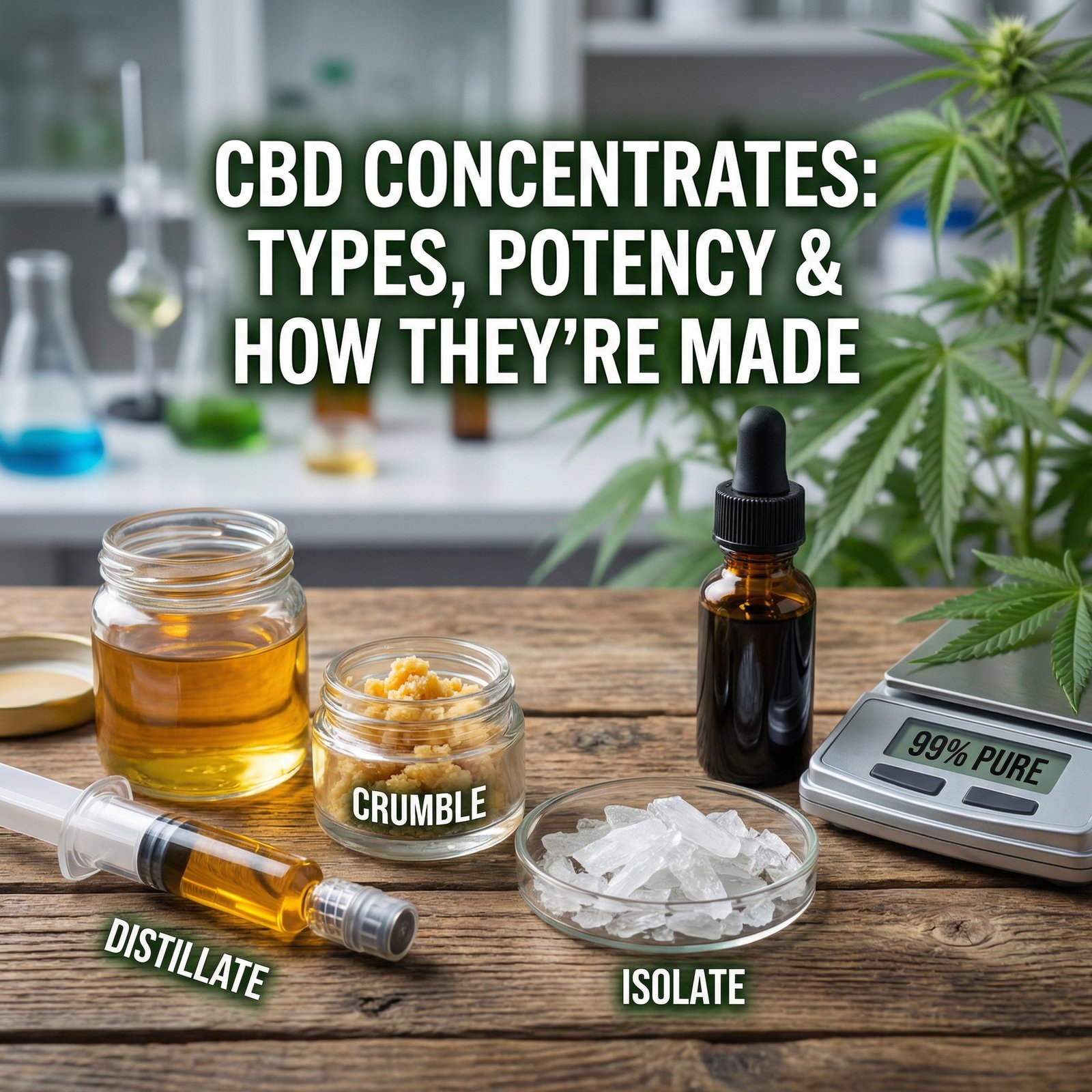
CBD concentrates are highly refined cannabis extracts designed to deliver concentrated levels of cannabidiol (CBD) with little to no psychoactive THC.
Unlike general cannabis concentrates, which often emphasize high-THC products like shatter or live resin, CBD concentrates are typically formulated for non-intoxicating use. They are commonly chosen by individuals seeking therapeutic applications without the euphoric effects associated with delta-9-tetrahydrocannabinol (THC).
Understanding how CBD concentrates are made, how potent they are, and how they differ from other cannabis extracts is essential for safe and informed consumption.
What Are CBD Concentrates?
CBD concentrates are highly refined cannabis extracts that contain concentrated levels of cannabidiol (CBD) with little to no psychoactive THC. Unlike general cannabis concentrates that often focus on THC potency and recreational use, CBD concentrates are formulated for users seeking therapeutic or non-intoxicating effects.
A CBD concentrate is produced by extracting cannabinoids from cannabis plant material and refining the extract to increase CBD purity. Depending on the refinement process, these concentrates may contain:
-
Pure CBD only
-
CBD plus minor cannabinoids
-
Trace amounts of THC within legal limits
CBD concentrates are commonly used in:
-
Oils and tinctures
-
Softgels
Because they are concentrated, they typically contain far higher CBD percentages than dried flower products.
According to Health Canada, cannabis products legally sold in Canada must comply with the Cannabis Act, including potency disclosure and strict packaging requirements (Health Canada – Cannabis Laws and Regulations).
Types of CBD Concentrates Explained
1. CBD Isolate
CBD isolate is the purest form of cannabidiol. It typically contains 99 percent or higher CBD and no detectable THC.
It is produced by removing all other plant compounds, including:
-
Flavonoids
-
Minor cannabinoids
-
Plant lipids
CBD isolate is often preferred by individuals who want:
-
Zero THC exposure
-
No cannabis aroma
-
Precise dosing control
The World Health Organization states that CBD exhibits no effects indicative of abuse or dependence potential in humans (WHO Critical Review Report on Cannabidiol).
Broad-Spectrum CBD
Broad-spectrum CBD contains cannabidiol along with other non-intoxicating cannabinoids such as:
-
CBG (cannabigerol)
-
CBC (cannabichromene)
However, THC is removed during refinement.
Broad-spectrum products aim to preserve the “entourage effect,” a proposed mechanism in which cannabinoids may work synergistically. Research published in Frontiers in Neurology discusses potential cannabinoid synergy, though further studies are still ongoing.
Full-Spectrum CBD
Full-spectrum CBD retains:
-
CBD
-
Minor cannabinoids
-
Terpenes
-
Trace THC
In Canada, THC levels in cannabis products are regulated under federal law. Edible cannabis products are limited to a maximum of 10 mg THC per package (Health Canada – Edible Cannabis Regulations).
Full-spectrum products may contain trace THC but must remain within legal limits and labeling standards.
CBD Distillate
CBD distillate is a highly refined extract produced through short-path or fractional distillation. It typically contains high CBD potency with minimal impurities.
Distillation removes unwanted plant compounds while concentrating cannabinoids.
CBD distillate is commonly used in:
-
Vape formulations
-
Infused edibles
-
Oral tinctures
How CBD Concentrates Are Made
The extraction process determines purity, potency, and safety.
CO2 Extraction
Supercritical CO2 extraction uses pressurized carbon dioxide to isolate cannabinoids from plant material.
Benefits:
-
No residual solvent contamination
-
Precise temperature control
-
High purity output
CO2 extraction is widely considered one of the safest commercial methods for cannabinoid extraction.
Ethanol Extraction
Ethanol extraction uses food-grade alcohol to extract cannabinoids and terpenes.
Advantages:
-
Efficient for large-scale production
-
Capable of producing full-spectrum extracts
However, the extract must undergo additional refinement to remove chlorophyll and unwanted compounds.
Winterization
Winterization removes fats, waxes, and lipids from crude extract by dissolving it in ethanol and cooling the solution.
This improves clarity and stability of the final product.
Distillation
Distillation separates cannabinoids based on boiling points. This step increases CBD concentration and removes impurities.
The result is a purified, high-potency CBD extract suitable for formulation into retail products.
How Potent Are CBD Concentrates?
CBD concentrate potency varies depending on type:
-
CBD isolate: 99 percent or higher
-
Distillate: 70 to 90 percent CBD
-
Full-spectrum: variable, depending on formulation
Potency is typically expressed as:
-
Percentage (e.g., 85% CBD)
-
Milligrams per gram (e.g., 850 mg per gram)
Consumers should verify potency through third-party lab testing.
Health Canada requires licensed producers to conduct laboratory testing for:
-
Cannabinoid potency
-
Microbial contamination
-
Pesticide residues
-
Heavy metals
(Health Canada – Licensed Cannabis Testing Requirements)
Are CBD Concentrates Legal in Nova Scotia?
Cannabis is federally legal in Canada under the Cannabis Act.
In Nova Scotia:
-
Legal age is 19
-
Public possession limit is 30 grams of dried cannabis or equivalent
-
Cannabis must be purchased from licensed retailers
CBD products derived from cannabis are legal when sold through authorized sources.
Products must comply with:
-
THC limits
-
Child-resistant packaging
-
Mandatory health warnings
-
Plain packaging standards
Consumers should avoid unregulated online sellers, as non-licensed products may not undergo mandatory safety testing.
How to Use CBD Concentrates Safely
CBD concentrates are potent. Responsible dosing is important.
Start Low and Adjust Gradually
If new to CBD:
-
Begin with 5 to 10 mg
-
Monitor response
-
Increase slowly if needed
Consider Bioavailability
Oral CBD undergoes first-pass metabolism in the liver. Bioavailability may be lower compared to inhalation methods.
A review published in the Journal of Clinical Pharmacology notes that oral CBD bioavailability can vary due to metabolism and individual differences.
Drug Interactions
CBD may interact with medications metabolized by cytochrome P450 enzymes.
Individuals taking:
-
Blood thinners
-
Anti-seizure medications
-
Certain antidepressants
should consult a healthcare professional before use.
CBD Concentrates vs THC Concentrates
| Feature | CBD Concentrates | THC Concentrates |
|---|---|---|
| Psychoactive | No | Yes |
| Primary Use | Therapeutic support | Intoxication / recreation |
| THC Content | None or trace | High |
| Typical Users | Wellness-focused | Recreational consumers |
| Legal Sale | Licensed retailers | Licensed retailers |
This distinction reinforces that CBD concentrates serve a different user intent than high-THC extracts.
Final Thoughts
CBD concentrates represent one of the most refined forms of cannabidiol available. Their safety and effectiveness depend on:
-
Extraction quality
-
Lab testing
-
Regulatory compliance
-
Responsible dosing
When purchased from TheSmokeBomb, a licensed Cannabis dispensary in Nova Scotia, CBD concentrates must meet strict federal safety and labeling standards.
Understanding the science behind extraction and potency allows consumers to make informed, compliant decisions.
Scientific – Research Based Sources
The following citations provide high-authority, peer-reviewed research and international health reports to support claims regarding CBD concentrates, extraction purity, the “entourage effect,” and pharmacological safety.
| # | Citation | Key Focus |
|---|---|---|
| 1 | World Health Organization (2018). Cannabidiol (CBD) Critical Review Report. | The definitive international health report confirming that CBD exhibits no effects indicative of abuse or dependence potential and has a good safety profile. |
| 2 | Russo, E. B. (2019). The Case for the Entourage Effect and Conventional Breeding of Clinical Cannabis. | Peer-reviewed research in Frontiers in Plant Science discussing the synergistic “entourage effect” between cannabinoids and terpenes in full-spectrum extracts. |
| 3 | Millar, S. A., et al. (2018). A Systematic Review on the Pharmacokinetics of Cannabidiol in Humans. | A comprehensive review in Frontiers in Pharmacology analyzing CBD’s low oral bioavailability and the impact of first-pass metabolism on dosing. |
| 4 | Health Canada (2024). Licensed Cannabis Testing Requirements and Regulations. | Official federal guidelines detailing mandatory laboratory testing for potency, microbial contamination, pesticides, and heavy metals in all legal cannabis products. |
| 5 | Britch, S. C., et al. (2020). Cannabidiol: Pharmacology and Therapeutic Targets. | Academic review summarizing the pharmacological profile of CBD, its interaction with the endocannabinoid system, and its potential therapeutic applications. |
| 6 | Taylor, L., et al. (2019). A Phase 1, Open-Label, Parallel-Group, Single-Dose Trial of CBD Pharmacokinetics. | Clinical study investigating the absorption and plasma concentration of CBD, providing data on how different delivery methods affect bioavailability. |
| 7 | U.S. FDA (2018). Medical Review of Cannabidiol (Epidiolex) for Seizure Disorders. | Technical evaluation of high-purity CBD (isolate) safety, including liver function monitoring and adverse event reporting in clinical populations. |