FREE SHIPPING ON ORDERS OVER 100$ IN HALIFAX, NS
FREE SHIPPING ON ORDERS OVER 200$ CANADAWIDE
COLLECT POINTS ON EACH PURCHASE
REFER A FRIEND AND EARN POINTS
CANADAWIDE EXPRESS SHIPPING


How to Store Weed Properly: Cannabis Storage Guide [2026]

How to Store Cannabis Flower Properly to Keep Weed Fresh?
You picked good weed online.
It looked perfect.
Smelled loud.
Then a week later…
It’s dry.
Harsh.
Losing its punch.
This happens more often than people think.
Cannabis is sensitive.
Air, light, heat, and humidity slowly break it down.
If you store it wrong, you lose:
- Potency
- Terpenes
- Flavour
- Smoothness
Quick Answer
Cannabis flowers should be stored in an airtight glass container, kept in a cool, dark place at 15–21C with humidity levels between 55–62%. Avoid plastic containers, heat, light exposure, and excess air to preserve potency and freshness.
Proper cannabis storage is far more than just keeping your flower looking good; it’s essential for preserving its full potential. The delicate balance of cannabinoids like THC and CBD, responsible for its potency, and the volatile terpenes that give each strain its unique flavor and aroma, are highly susceptible to degradation. Without the right storage conditions, these valuable compounds can break down quickly, diminishing the overall quality and effectiveness of your cannabis.
Understanding and controlling a few key environmental factors is the secret to keeping your cannabis flower fresh, potent, and flavorful for as long as possible. This guide will walk you through the critical elements of proper cannabis storage, ensuring you get the most out of every bud.
Why Proper Cannabis Storage Matters: Preserving Potency, Terpenes, and Freshness
The quality of your cannabis flower isn’t just determined by its initial harvest and cure; it’s significantly influenced by how it’s stored. Exposure to the wrong conditions can accelerate degradation in several key ways, impacting everything from its therapeutic effects to its sensory appeal.
Cannabinoid Degradation: The Potency Drain
Cannabinoids, such as THC (tetrahydrocannabinol) and CBD (cannabidiol), are the compounds responsible for the primary effects of cannabis. Unfortunately, they are not immune to environmental stressors.
-
Heat: Elevated temperatures are a major enemy of cannabinoids. Prolonged exposure to heat, especially above room temperature, can cause THC and CBD to break down over time. This means your flower will gradually lose its potency, offering less pronounced effects.
-
Light: UV and even visible light can accelerate cannabinoid degradation. Think of it like leaving a delicate product out in the sun – the active compounds slowly degrade, reducing the overall strength of the flower.
Terpene Loss: The Aroma and Flavor Thief
Terpenes are the aromatic compounds found in cannabis that are responsible for its distinct smells and flavors, and they also play a role in the entourage effect, potentially modulating the impact of cannabinoids. They are even more volatile than cannabinoids.
-
Exposure to Air: Oxygen can cause oxidation, leading to a loss of terpenes. When cannabis flower is not stored in an airtight container, these aromatic compounds can evaporate over time, leaving behind a duller, less appealing scent and taste.
-
Improper Humidity: While too much moisture leads to mold, too little can also cause problems. When cannabis dries out excessively, terpenes can evaporate more rapidly from the plant material. Maintaining a balanced humidity level is crucial for preserving these volatile compounds.
Mold and Mildew: The Health Hazard
The presence of mold or mildew on cannabis flower is not only unpleasant but also a significant health risk.
-
Excessive Moisture: High humidity levels (consistently above 65-70%) create the perfect breeding ground for mold and mildew spores. This can ruin an entire stash and pose serious respiratory dangers if ingested or inhaled. Proper airflow and controlled humidity are critical preventative measures.
Drying Out: Brittle Buds and Lost Trichomes
Conversely, insufficient humidity can be just as detrimental as too much.
-
Low Humidity: When cannabis flower becomes too dry (typically below 50% RH), it loses its moisture content. This results in brittle buds that crumble easily. More importantly, the delicate trichomes – the tiny crystalline structures on the surface of the flower that contain cannabinoids and terpenes – can become dislodged and lost during handling or consumption. This leads to a loss of both potency and flavor.
According to Health Canada, cannabis must be stored in conditions that prevent contamination and degradation.
🔗 https://www.canada.ca/en/health-canada/services/drugs-medication/cannabis/laws-regulations.html
The Ideal Conditions for Storing Cannabis Flower
Temperature
- Ideal: 15–21C
- Too hot → dries out terpenes
- Too cold → brittle trichomes
Humidity
- Ideal range: 55%–62% RH
- Below 50% → dry, harsh weed
- Above 65% → mold risk
Humidity control is one of the most important factors.
Light Exposure
- Keep cannabis in darkness
- UV light degrades THC into CBN over time
Light = potency loss.
Air Exposure
- Oxygen breaks down cannabinoids
- Frequent opening accelerates degradation
Less air = longer shelf life.
Choosing the Best Cannabis Storage Containers
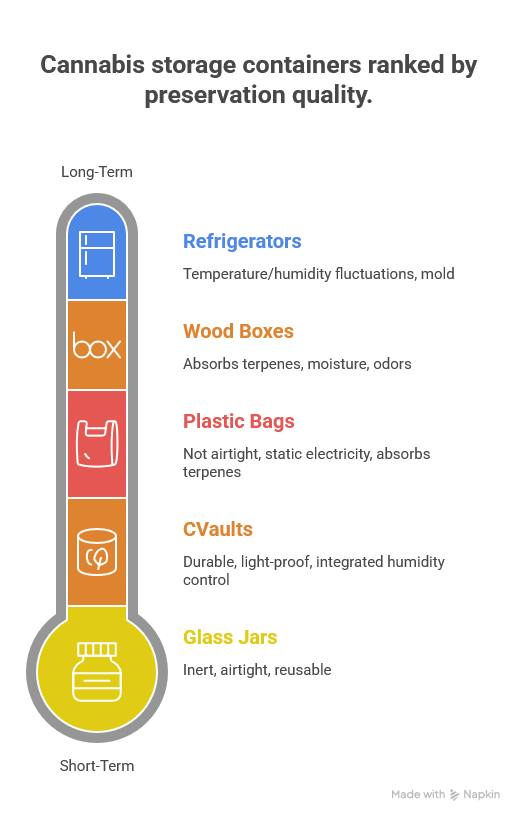
The container you choose for your cannabis flower plays a pivotal role in maintaining its quality. While airtightness and light protection are paramount, different materials and designs offer varying benefits. Selecting the right container is key to preserving potency, terpenes, and overall freshness.
Glass Jars (Best Option)
Glass jars are a popular and effective choice for cannabis flower storage, especially for everyday use and short-to-medium term storage.
Pros:
- Inert Material: Glass does not react with cannabis, ensuring no unwanted flavors or chemical leaching.
- Airtight Seal: When paired with a quality lid (often featuring a gasket), glass jars provide an excellent airtight seal to prevent terpene evaporation and oxidation.
- Odor Control: A well-sealed glass jar is highly effective at containing odors.
- Reusable: Glass jars are durable and can be reused indefinitely.
Cons:
Light Permeability: Clear glass jars expose your flower to light, which can degrade cannabinoids and terpenes over time. For best results, opt for dark or amber glass jars, or store clear jars in a dark place.
Humidity Control Packs: Essential for Longevity
Even with the best airtight container, maintaining the optimal relative humidity (RH) is critical for cannabis preservation. This is where humidity control packs, such as Boveda or Integra Boost, become indispensable.
-
Functionality: These two-way humidity control packs maintain a stable RH level within your container. For cannabis flower, the ideal range is typically between 55% and 62% RH.
Benefits:
- Prevents Drying Out: Stops flower from becoming too dry and brittle, preserving trichomes and texture.
- Prevents Mold: Prevents excess moisture that can lead to mold and mildew growth.
- Preserves Terpenes: A stable humidity environment helps prevent rapid terpene evaporation.
-
Usage: Simply place one or two humidity packs inside your airtight cannabis storage container. They last for several months and indicate when they need to be replaced (often by becoming stiff or dry).
Specialized Cannabis Storage Systems
For those seeking the utmost in cannabis preservation, particularly for long-term storage or collecting, specialized systems offer enhanced features.
CVaults and Similar Containers: These are typically made of stainless steel or thick, dark glass, offering superior light protection and durability. They often feature a high-quality, airtight seal and are designed to accommodate humidity control packs seamlessly.
- Advantages: Highly durable, completely light-proof, excellent airtightness, integrated humidity control.
-
Lockable Options: Some high-end storage systems offer locking mechanisms, providing an added layer of security and discretion.
What to Avoid: While convenient for short-term transport, many common household items can harm your cannabis flower:
-
Plastic Bags (especially Ziploc): These are not truly airtight, can generate static electricity that pulls trichomes off the flower, and can absorb terpenes over time. They offer minimal protection against light and air.
-
Wood Boxes (Untreated): Porous wood can absorb terpenes, affecting aroma and flavor. It can also introduce unwanted moisture or odors.
-
Refrigerators/Freezers: Fluctuations in temperature and humidity (condensation) can lead to mold and degradation.
Humidity Packs: Do You Need Them?
Humidity packs (like 58% or 62%) help regulate moisture.
Benefits
- Prevent drying
- Stabilize terpene profile
- Maintain smooth burn
When to Use
- Long-term storage
- Bulk purchases
- Dry climates
Where Should You Store Cannabis?
Best Locations
- Drawer
- Cabinet
- Closet
Cool, dark, stable environments work best.
Avoid
- Cars (temperature swings)
- Windows (UV exposure)
- Bathrooms (humidity fluctuations)
- Kitchens (heat exposure)
How Long Does Cannabis Stay Fresh?
Properly stored cannabis can last:
- 3–6 months → optimal freshness
- 6–12 months → gradual decline
- 12+ months → noticeable potency loss
Terpenes degrade faster than THC.
That’s why old weed smells weak.
Signs Your Weed Has Gone Bad
Watch for:
- Dry, crumbly texture
- Loss of smell
- Harsh smoke
- Mold (white fuzz or webbing)
- Dark brown coloration
If mold is present, discard immediately.
Freezing Weed: Good or Bad?
Freezing is not recommended.
Why:
- Trichomes become brittle
- Break off easily
- Reduces potency
Cold storage damages structure.
Can You Rehydrate Dry Weed?
Yes, but carefully.
Methods
- Humidity packs (safest)
- Citrus peel (temporary, risky if overdone)
Too much moisture = mold risk.
Rehydration restores texture, not original terpene profile.
Storage Mistakes That Ruin Good Weed
Avoid these common mistakes:
- Leaving weed in plastic bags
- Exposing it to sunlight
- Opening jars too often
- Storing near heat sources
- Ignoring humidity control
These silently degrade quality.
How This Connects to Quality
Even AAAA weed can degrade to mid-grade if stored poorly.
Storage affects:
- Terpene retention
- Cannabinoid stability
- Burn quality
Good storage protects your purchase.
FAQ: How to Store Cannabis Flower
What is the best container for storing weed?
Airtight glass jars are the best option. They prevent air exposure and preserve terpene profile and potency.
What humidity level is best for cannabis?
The ideal humidity range is 55%–62%. This prevents dryness while avoiding mold growth.
Does light damage cannabis?
Yes. UV light degrades THC into less potent compounds over time, reducing effectiveness.
How long does weed stay fresh?
Cannabis stays fresh for 3–6 months when stored properly. After that, potency and aroma gradually decline.
Can weed go bad?
Yes. Improper storage can lead to mold, dryness, terpene loss, and reduced potency.
Ref Sources
- https://www.leafly.com/learn/cannabis-explained/how-to-store-cannabis
- https://thebluntness.com/features/how-to-store-cannabis-flower-properly-a-comprehensive-guide
- https://www.royalqueenseeds.com/blog/how-to-store-cannabis-flower-n640
- https://www.kindgreenbuds.com/cannabis-growing-tips/best-way-to-store-cannabis-flower/
Research-Based Citations for Cannabis Storage and Preservation
| # | Citation | Key Focus |
|---|---|---|
| 1 | Das, P. C., et al. (2025). Enhancing drying efficiency and terpene retention of cannabis inflorescence. | Peer-reviewed study in Industrial Crops and Products highlighting how precise post-harvest storage conditions are critical for the retention of volatile terpenes, which define the aroma and therapeutic profile. |
| 2 | Alberti, T., et al. (2025). Effect of short-term storage on cannabinoid content of dried floral hemp. | Research in Journal of Applied Research on Medicinal and Aromatic Plants confirming that storage temperatures above 22°C and light exposure significantly accelerate the degradation of THC and CBD. |
| 3 | Moyen, N. E., et al. (2024). The influence of drying and storage conditions on the volatilome and cannabinoid content of Cannabis. | Study in Analytical and Bioanalytical Chemistry investigating the “kinetic deterioration” of cannabis compounds when exposed to varying humidity and temperature levels in darkness. |
| 4 | Jaidee, W., et al. (2022). Kinetics of CBD, Δ9-THC Degradation and Cannabinol Formation in Cannabis. | Landmark kinetic study in Cannabis and Cannabinoid Research detailing the chemical conversion of THC into CBN (cannabinol) as a direct result of thermal and oxidative stress during storage. |
| 5 | Corredor-Perilla, I. C., et al. (2025). Elevated relative humidity significantly decreases cannabinoid and biomass yield. | 2025 research in Frontiers in Plant Science demonstrating how humidity levels outside the optimal 58-62% range lead to rapid compound degradation and increased microbial risk. |
| 6 | Zamengo, L., et al. (2019). The role of time and storage conditions on the composition of marijuana samples: A four-year study. | Long-term longitudinal study in Forensic Science International quantifying the rate of potency loss over years, emphasizing that room temperature storage is unsuitable for long-term preservation. |
| 7 | Cannabis Science and Technology (2025). Beyond the Buzz: How Engineered Atmospheres are Revolutionizing Cannabis Preservation. | Technical report on the use of two-way humidity control packs and airtight glass containers to maintain the “equilibrium relative humidity” (ERH) required for terpene stability. |
| 8 | Health Canada (2024). Cannabis Laws and Regulations: Storage and Contamination Prevention. | Official federal guidelines outlining the regulatory requirements for storing cannabis in conditions that prevent chemical degradation and microbial contamination (mold/mildew). |